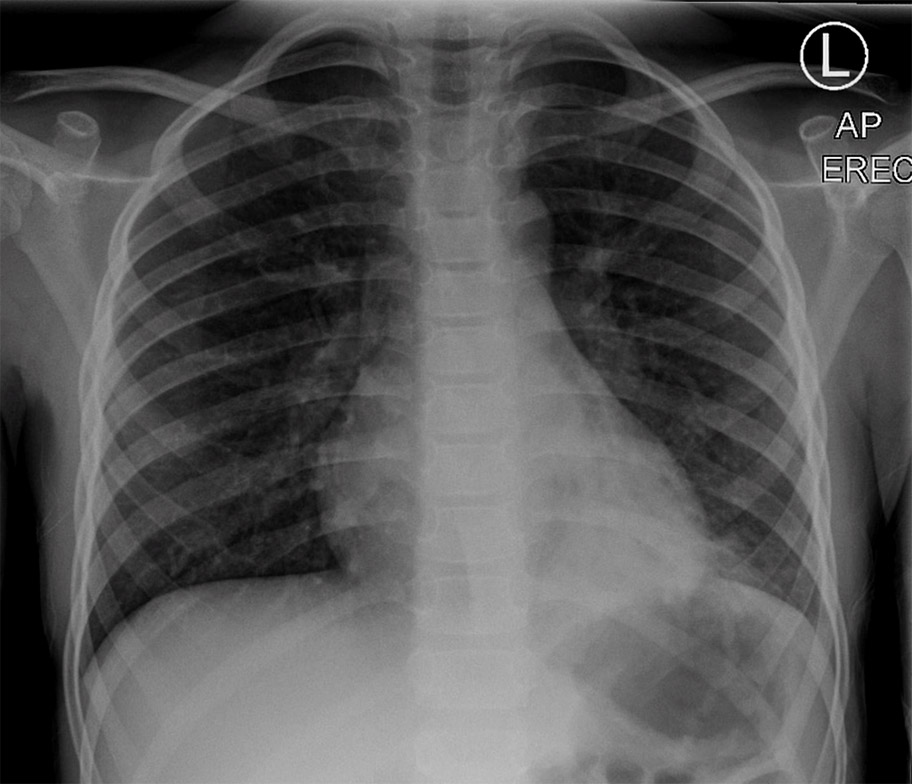
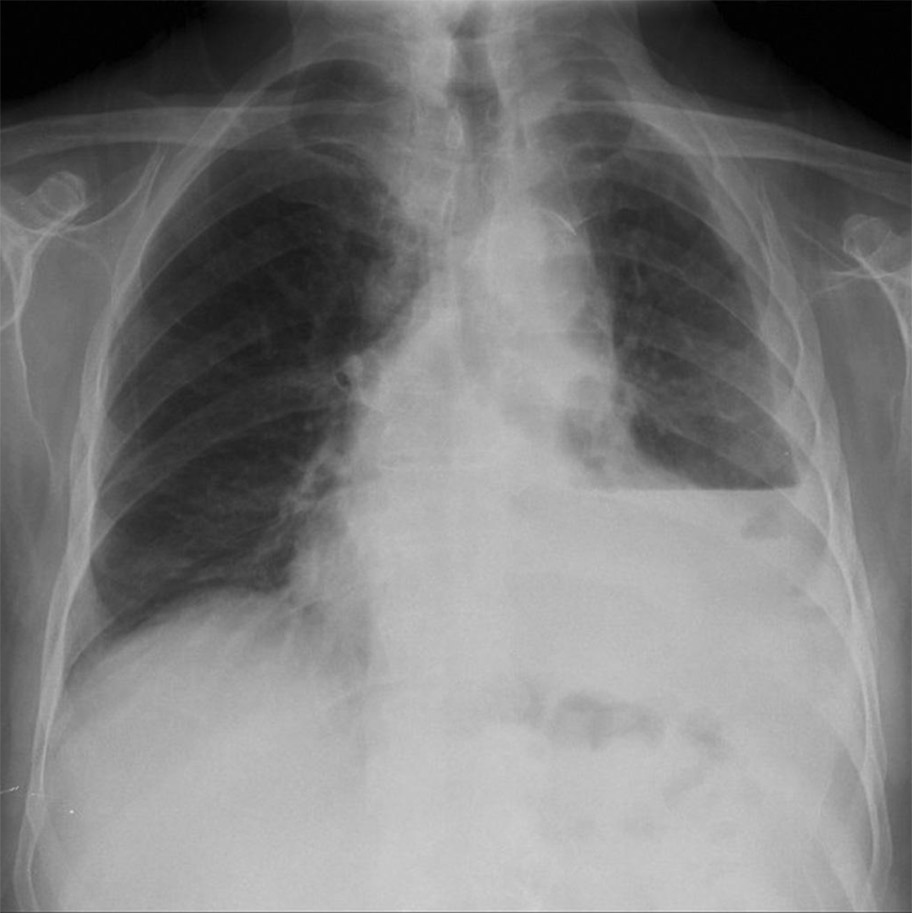
Case 2 - Tina
- You are a clinician working in an emergency department in Queensland.
- You are about see a 2 year old female called Tina who was brought in by her single father Craig. Craig tells you the reason they presented was that 'Tina was having difficulty breathing'.
- Observations: RR: 40 O2: 94% T: 37.8 HR: 135 BP: 95/65 (MAP 75)
- The history is notable for a 3 days of rhinorrhoea, cough and subjective fevers. The breathing seemed to slightly increase yesterday evening, but was worse today which prompted presentation. Tina’s oral intake has slightly decreased since being unwell.
- There were no relevant or concerning findings on perinatal history, developmental history, medical history, medications, allergies, vaccinations, family history, and social history.
- Tina appeared well but was noted to have difficulty breathing. She had moderate subcostal and intercostal recessions with wheeze noted bilaterally on respiratory examination. The rest of the examination was unremarkable.
Questions to discuss about Tina’s case
- What is the most likely diagnosis? Consider severity and most likely etiology.
- Will Tina go on to develop asthma? What is the difference?
- What tests (if any) should you request?
- What condition should you consider if Tina had presented with a wet cough for 4 weeks with no concerning/red flag features, with a normal examination and CXR? How would you manage this?
More information about Tina’s case
Following your initial severity assessment, you conclude that Tina’s presentation is most consistent with a presentation of a moderate episode of viral-induced wheeze.
Question to discuss about Tina’s case
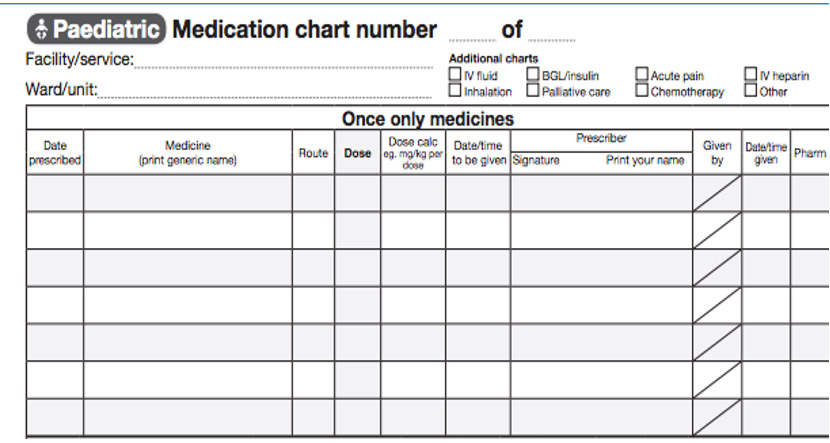
- You discuss the patient with your consultant and the decision is to proceed with a salbutamol burst. What would you chart in the medication chart shown below?
More information about Tina’s case
In addition to earlier reviews, you have now gone to review Tina at 8:40 am after the completion of her burst. You are making a decision on Tina’s response to salbutamol, and how you should stretch it.
Questions to discuss about Tina’s case
- What factors should you consider when deciding on stretching the time between salbutamol doses?
- What is salbutamol toxicity?
- Should Tina receive salbutamol using an MDI and spacer or via a nebuliser?
- What education should you give Tina's parents about how to use a spacer?
- When should you consider ipratropium bromide?
- Should you prescribe a steroid course?
- When would you consider oxygen therapy?
- When should you consider IV magnesium sulphate for Tina?
- When should you consider a preventer? Which preventer?
More information about Tina’s case
Tina has now been stretched to 3 hourly salbutamol and has been otherwise assessed as clinically suitable for discharge.
Questions to discuss about Tina’s case
- What discharge criteria should be met prior to considering discharge?
- What should the family be provided with prior to discharge?
Normal range for vital signs by age
Normal range for vital signs by age based on Childhood Early Warning Tool (CEWT)| Age | Heart rate (bpm) | Minimum Systolic BP (mmHg) | Respiratory Rate (bpm) |
|---|
| <1 year old |
100-159
|
<75
|
21-45
|
| 1-4 year old |
90-139
|
<80
|
16-35
|
| 5-11 year old |
80-129
|
<85
|
16-30
|
| 12-17 year old |
60-119
|
<90
|
16-25 |
Case 3 - Abraham
- You are a clinician working in an emergency department in Queensland.
- You are about see a 7 year old male called Abraham who was brought in by his mothers Peta and Stephanie. They tell you the reason they presented was that 'Abraham was having difficulty breathing'.
- Observations: RR: 35 O2: 94% T: 37.8 HR: 100 BP: 100/70 (MAP 80)
- The history is notable for 3 days of rhinorrhoea, cough and subjective fevers. The breathing seemed to slightly increase yesterday evening, but was worse today which prompted presentation. Abraham’s oral intake has slightly decreased since being unwell.
- His medical history includes a previous episode of wheezing requiring salbutamol at the age 5 managed through his GP. He has never been to hospital with wheezing. He also has eczema which is managed through his GP with an eczema action plan.
- There were no relevant or concerning findings on perinatal history, developmental history, medications, allergies, vaccinations, family history, and social history.
Questions to discuss about Abraham’s case
- What is the most likely diagnosis, including severity?
- What are some differential diagnoses to consider?
- Which tests (if any) should you request?
- How would you assess the severity of Abraham’s condition?
More information about Abraham’s case
Following your initial severity assessment, you conclude that Abraham’s presentation is most consistent with a presentation of a moderate asthma exacerbation. Abraham is 22 kg.
You discuss the patient with your consultant and the decision is to proceed with a salbutamol and ipratropium burst. There is a discussion on steroids.
Question to discuss about Abraham’s case
- What would you chart in the medication chart shown below?
More information about Abraham’s case
In addition to earlier reviews, you have now gone to review Abraham at 8:40am after the completion of his salbutamol and ipratropium burst. You are making a decision on Abraham’s response to salbutamol, and how you should stretch it.
Questions to discuss about Abraham’s case
- What factors should you consider when deciding on stretching the time between salbutamol doses?
- Which would you use for Abraham: MDI with spacer or Nebuliser? Why?
- What is the role of steroids in children with asthma? Which steroid would you prescribe?
More information about Abraham’s case
You continue to review Abraham regularly but are unable to stretch him past 45 minutely salbutamol. You feel that he is not improving to an appropriate level. He is discussed and reviewed by a senior doctor. The decision is made to move Abraham to the resuscitation zone of the emergency department. Whilst Abraham is receiving his charted medications, the decision is made to escalate his care.
Questions to discuss about Abraham’s case
- Which intravenous medication is the most suitable to prescribe at this stage?
- What are some other intravenous medications that could be used in asthma management?
More information about Abraham’s case
Abraham has now been stretched to 3 hourly salbutamol and has been otherwise assessed as clinically suitable for discharge.
Questions to discuss about Abraham’s case
- What discharge criteria should be met prior to considering discharge?
- What should the family be provided with prior to discharge?
- When would you consider a preventer for Abraham? Which preventer?
Normal range for vital signs by age
Normal range for vital signs by age based on Childhood Early Warning Tool (CEWT)| Age | Heart rate (bpm) | Minimum Systolic BP (mmHg) | Respiratory Rate (bpm) |
|---|
| <1 year old |
100-159
|
<75
|
21-45
|
| 1-4 year old |
90-139
|
<80
|
16-35
|
| 5-11 year old |
80-129
|
<85
|
16-30
|
| 12-17 year old |
60-119
|
<90
|
16-25 |