Purpose
This document provides clinical guidance for all staff involved in the care and management of a child presenting to an Emergency Department (ED) in Queensland with unexplained hypoglycaemia.
This guideline has been developed by the department of Metabolic Medicine at the Queensland Children’s Hospital in consultation with senior ED clinicians and Paediatricians across Queensland. It has been endorsed for statewide use by the Queensland Emergency Care of Children Working Group in partnership with the Queensland Emergency Department Strategic Advisory Panel and the Healthcare Improvement Unit, Clinical Excellence Queensland.
Introduction
Maintaining glucose homeostasis relies on:
- an intact system of endocrine hormones (insulin, glucagon, growth hormone, cortisol)
- a system of intact metabolic pathways to be able to use fat, protein and glucose
- suitable substrates that are able to be metabolised to produce glucose/ketones for energy in times of fasting e.g. glycogen, protein, fat.
Some children become symptomatic of hypoglycaemia or hypoglycaemic faster than others.
Hypoglycaemia is defined as a blood glucose measurement (BGL) of ≤2.6 mmol/L using a blood gas machine, iSTAT, or formal laboratory testing.
As glucometers are unreliable at measuring low levels of glucose it is suggested that 3.0mmol/L be considered a reasonable level to begin formal investigations.
| Possible causes of hypoglycaemia |
|---|
Severe vomiting or diarrhoeal illness |
Prolonged fasting |
Underlying medical conditions including: - liver disease (i.e. end stage liver failure)
- hyperinsulinism
- hormone deficiencies such as hypopituitarism
- neonatal sepsis
- metabolic causes
|
Ingestions (in younger children) |
Drugs and alcohol (in an adolescent) |
The most common cause of hypoglycaemia in children is ketotic hypoglycaemia (KH) of childhood. This is a physiological condition that is a variant of normal and expected in a fasting state. Most children grow out of KH by mid-late primary school age.
In the absence of a history of prolonged fasting (over 30 hours) and blood ketones >4, all children with a BGL ≤ 2.6mmol/L should be investigated for an underlying disorder.
This is a critical time to obtain samples and gain a diagnosis.
Refer to the Queensland Newborn Hypoglycaemia Guideline [PDF] for the management of newborns prior to initial discharge from hospital. The management of children with a diagnosis known to present with hypoglycaemia is beyond the scope of this guideline. Manage these children as per their emergency sick day management plan.
Assessment
A child with hypoglycaemia may appear drowsy, listless and lethargic.
A thorough history and examination is important to identify other precipitating causes that need further investigation.
History
History taking should include the following:
- How long has the child fasted before becoming hypoglycaemic?
- Has the child suffered symptoms of vomiting, diarrhoea or fasted in the last three days?
- Is the child sometimes difficult to wake in the morning?
- How long does the child usually fast overnight?
- Was the hypoglycaemia precipitated by a protein meal?
- Has the child had recent exposure to fruit or honey (consider hereditary fructose intolerance)?
- Could the child have had any medications or alcohol? (especially insulin, metformin, beta-blockers, quinine, chloroquine, salicylates and valproate)
Examination
Red flags to suggest an underlying disorder
- midline defects – consider pituitary hormone deficiencies
- organomegaly – consider storage disorders such as glycogen storage disease
- small genitalia in a male child – consider pituitary hormone deficiencies
- hyperpigmentation – consider adrenal insufficiency
- short stature
- macrosomia
- growth hormone deficiency or overgrowth syndrome
- hyperinsulinism – especially in an infant
- hypoglycaemia precipitated by shorter (<6 hour) fasting period
Seek senior emergency/paediatric advice as per local practice if suspect an underlying disorder.
Investigations
The presence of blood or urinary ketones at the time of presentation is essential to differentiating possible causes of the hypoglycaemia and obtaining a final diagnosis. Blood ketones can be rapidly performed in ED and should be measured at the same time as formal confirmation of blood glucose. If testing urinary ketones, it is important to obtain the first urine passed after the hypoglycaemia is confirmed.
Blood collection
Ideal blood collection for the initial investigation of unexplained hypoglycaemia
Prioritised blood collection for child with blood collection difficulties
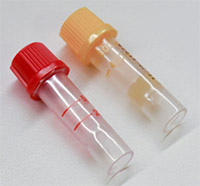
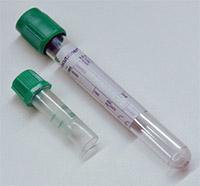
Essential blood collection (required volume 2mL)| Tube type | Tube description | Volume | Tests required |
|---|
| Lithium heparin- no gel |
Green pedi-pot or adult pot
(see image above)
|
0.5mL
| - acylcarnitine
- plasma amino acids – may be done from a newborn screening card if collection is difficult.
|
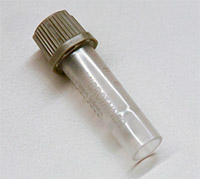
| Fluoro-oxalate |
Grey pedi-pot (see image above)
|
1mL
| Can be performed on VBG |
| Serum |
Red or yellow pedi-pot
(see image above)
|
0.5mL
| |
Second priority investigations (2 mL volume)| Tube type | Tube description | Volume | Tests required |
|---|
| Serum |
Red or yellow pedi-pot
(see image above)
|
0.5mL
| |
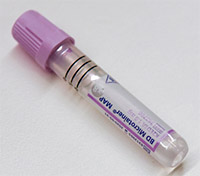
| EDTA |
Purple pedi-pot (see image above)
|
0.5mL
|
As per table above
|
| Serum |
Red or yellow pedi-pot
(see image above)
|
1.0mL
| |
Urine
A urine metabolic screen includes urine amino acids and organic acids.
Critical urine sample
The first urine passed after the episode of hypoglycaemia (BGL ≤2.6mmol/L) is the CRITICAL SAMPLE.
It must be collected and sent for a urine metabolic screen regardless of age and time since hypoglycaemic episode.
Management
Refer to flowchart [PDF 362 KB] for a summary of the management of a child presenting to ED with hypoglycaemia.
Alert
Hypoglycaemia is a medical emergency. If left untreated it can cause convulsions, irreversible brain damage and death.
Acute management
Obtain IV/IO access rapidly for child with BGL <3.0 mmol/L on a glucometer.
Upon obtaining IV access:
- obtain formal BGL on blood gas machine, iSTAT or formal laboratory testing
- draw 5 mL of blood (ideally) for further investigations (See Investigations section)
- measure blood ketones using a blood ketone monitor
Management of child with formal BGL >2.6 mmol/L
- If low normal BGL, push fluids with initial high sugar content (apple juice, flavoured ice block) followed by more complex carbohydrates.
- If formal BGL is greater than 3.0mmol/L, do not send bloods for further investigation
Management of child with hypoglycaemia (formal BGL ≤2.6mmol/L)
Children with a history of prolonged fasting (over 30 hours) and blood ketones >4 can be managed as KH.
In addition to treating the hypoglycaemia, blood and urine should be collected from all remaining children to screen for an underlying disorder (refer to Investigation section).
Alert
Hypoglycaemia should be treated with Glucose 10% +Sodium Chloride 0.9% IV fluids.
A Glucose 5% infusion is usually not sufficient to maintain BGL or clear ketones.
| Management of hypoglycaemia in children |
|---|
| Initial bolus dose (IV) |
2 mL/kg of 10% glucose
|
| Following IV bolus | Commence an infusion of Glucose 10% + Sodium Chloride 0.9% at maintenance rate. Take a 1L bag of Glucose 5% with Sodium Chloride 0.9%, withdraw 100 mL of fluid from the bag and discard. Inject 100 mL of 50% glucose into the bag and mix well. Refer to QCH IV Fluid Guideline [PDF] (QH only). If dehydrated, commence maintenance fluids plus replacement of deficit over 24 hours. |
| Monitoring |
IV site hourly for signs of extravasation due to the hyperosmolality of the infusion (see Insertion and management of peripheral and central venous access devices [PDF] (QH only)
|
IM glucagon is unlikely to benefit a child with KH.
IO route is recommended if unable to obtain IV access.
Consider seeking senior emergency/paediatric advice as per local practice for child with a BGL ≤2.6, a history of fasting over 30 hours and blood ketones >4.
Seek senior emergency/paediatric advice as per local practice for child BGL ≤2.6 without a history of fasting over 30 hours and blood ketones >4. Additional investigations are required.
Ongoing management
Seek senior emergency/paediatric advice as per local practice if no clinical improvement following initial glucose bolus and IV fluid infusion. Consider seeking paediatric metabolic advice.
Seek relevant specialist advice as clinically indicated by results of the hypoglycaemia screen for ongoing investigations and management.
Review the IV fluid calculation and glucose concentration for children with ongoing symptoms of clinical concern following initial bolus and IV infusion. Consider alternate/concurrent diagnoses.
On admission to the ward or SSU:
- continue 10% glucose + 0.9% NaCl at maintenance rate (plus additional fluids to replace deficit if dehydrated).
- administer Ondansetron for children over 12 months of age with nausea or vomiting (note ketones alone can cause nausea which may not settle until ketones have cleared).
- encourage oral fluids (see below) and diet, preferably with foods containing carbohydrates.
- once tolerating oral intake IV fluids may be discontinued or changed to 5% glucose with 0.9% NaCl at a reduced rate.
- organise discharge medications (glucose gel and glucose 10% polymer, +/- ondansetron) early in admission.
| Ondansetron for the management of nausea or vomiting in children |
|---|
| Dose | Given orally or sublingually at a dose of 0.15 mg/kg (maximum 8 mg). Tablets and wafers are available in 4 mg and 8 mg doses. Recommended doses are as follows: - 8-15 kg: 2 mg
- 15-30 kg: 4 mg
- greater than 30 kg: 8 mg
Not recommended for children aged less than 6 months, weight less than 8 kg or with ileus. |
| Considerations |
Ondansetron prolongs the QT interval in a dose–dependent manner. Exercise caution in children who have or may develop prolongation of QTc (such as those with electrolyte disturbances, heart failure or on medications that may lead to a prolongation of the QTc).
|
Fluids
Appropriate oral fluids include:
- 10% glucose polymer (Polyjoule, CarbPlus, SOS formulas)
- 100% apple juice
The following fluids are unsuitable:
- glucolyte (2.5% glucose + 3% sucrose)
- hydralyte ice blocks (1.6% glucose)
Monitoring
Children with hypoglycaemia require routine observation as dictated by their clinical condition.
BGL monitoring
BGL monitoring is not required for children receiving a Glucose 10% infusion as the risk of hypoglycaemia is minimal unless hyperinsulinism is suspected.
Consider BGL monitoring for the following children:
- symptoms of clinical concern such as pallor, vomiting, tachycardia or drowsiness
- ketones that are absent or inappropriately low (consider hyperinsulinism and continue BGL monitoring until insulin level is known).
It is the treating doctor’s responsibility to document if BGL monitoring is required.
Ketone monitoring
Test urine for ketones after 12 – 24 hours of treatment to ensure urine ketones have cleared or are clearing. If ketones are present, continue to monitor 12 – 24-hourly until cleared.
Disposition
All patients with unexplained hypoglycaemia require a period of observation. Admission to an inpatient service is usually required but admission to an SSU (where relevant) may be considered.
Children with refactory BGLs despite IV therapy or rebound hypoglycaemia on cessation of fluids require admission to an inpatient service.
Discharge from the ward or SSU
On discharge, caregiver/s should be provided with:
- script for the following:
- 1 tube of glucose gel
- +/- Ondansetron
- +/- 1 can of 10% glucose polymer with the age-appropriate recipe (Lucozade is an appropriate alternative if more than 5 years of age)
- education including:
- signs, symptoms and emergency management of hypoglycaemia
- written instructions on management to prevent a recurrent hypoglycaemic episode as per Sick Day Plan [PDF 480.13 KB]
- advice against purchasing a glucometer or monitoring BGLs at home (as results can be inaccurate and misleading)
Follow-up
In the event that an overnight fast rather than an intercurrent vomiting illness precipitated the hypoglycaemic episode, discuss with the on-call Metabolic Physician, Queensland Children’s Hospital. The administration of night time cornstarch may be required on discharge.
First presentation of unexplained hypoglycaemia
- formal written referral to the Department of Metabolic Medicine, Queensland Children’s Hospital to review results of initial metabolic screening. Consultation can be conducted via telehealth if required.
Subsequent presentations
- liaise with Department of Metabolic Medicine, Queensland Children’s Hospital to determine the need for further outpatient follow-up and if needed book into local General Paediatric outpatient clinic.
Related documents