Using a nipple shield can sometimes help establish breastfeeding in difficult situations, including:
- A premature or ill baby needing temporary assistance with teat formation.
- A baby who is not premature, but having difficulty latching to the breast and who requires assistance with teat formation.
- A baby who has been used to sucking on a silicone teat and is having difficulty adjusting to the breast.
- The mother’s nipples are inverted or flat, or have fibrous texture affecting successful latch for her baby.
- A baby who has a tendency to bite onto the breast.
- The mother has an over-abundant milk volume which is temporarily affecting the baby’s latch.
Nipple shields should not be introduced until your milk has ‘come-in’, enabling sufficient milk transfer through the shield.
Advantages
- A nipple shield may give palatal stimulation to a baby who needs this to suck rhythmically.
- In some small babies, the shield can increase transfer of milk to the baby once the baby is latched well to the shield and breast and is sucking rhythmically.
- Little or no reduction in milk transfer using a thin, silicone nipple shield.
- A nipple shield may reinforce a wide open mouth position at the breast.
- A shield may assist the baby to maintain a latch at the breast.
Disadvantages
Some babies will become very familiar with the firm texture of the shield and find it difficult to transition back to the softness of the actual nipple. This may take weeks to achieve.
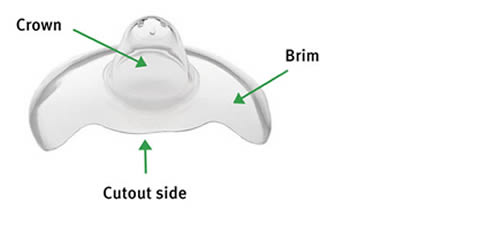
How to use a nipple shield
- Express a few drops of breast milk onto the inside brim of the nipple shield. This will help the shield to stick and prevent movement.
- Express some breast milk into the tip of the shield.
- Stretch the brim of the nipple shield outwards and place the nipple shield over the nipple and onto the breast.
- Position the ‘cut out’ side of the shield where the baby’s nose will be and flatten the brim of the shield over the breast.
- Hold the edges of the shield in place with your fingers. Point the crown of the nipple shield at the baby’s nose and encourage the baby to open their mouth wide.
It’s important to learn how to use a nipple shield properly and it usually requires a face-to-face consultation with a health professional such as a lactation consultant or breastfeeding counsellor. This helps ensure your baby is well attached with the nipple shield and you know how to tell if your baby is getting enough breastmilk through it.
Cleaning a nipple shield
- First, rinse in cold water.
- Then, wash in hot, soapy water, removing all milky residue.
- Rinse well with clean water.
- Air dry, or pat dry with a clean paper towel.
- Store in a clean, dry container with a lid. The storage container should be washed and dried daily.
Weaning off the nipple shield
All mothers and babies who need soft nipple shields to breastfeed in hospital and after discharge are advised to stay in close contact with their community child health nurse and/or lactation consultant.
They will be able to advise and assist you with weaning the baby off the shield.
In consultation with experienced lactation specialists, it is hoped that in time the baby may wean successfully from the shield onto the breast, although this is not essential for continued breastfeeding.
For more information
- Breastfeeding | Health A to Z
- Australian Breastfeeding Association
- Breastfeeding and nipple shields video on Vimeo - Australian Breastfeeding Association