Buckle fracture are a type of broken bone common in children under 12.
They often occur in the radius and ulna (the bones that connect the forearm to the wrist) and are usually caused by falling onto outstretched arms. Buckle fractures can also thigh, shin and upper arm.
A buckle fracture (or compression fracture) is caused by sudden pressure on a bone which ‘buckles’ the bone without snapping it. This pressure pushes on your child’s bone hard enough to bulge it out of place.
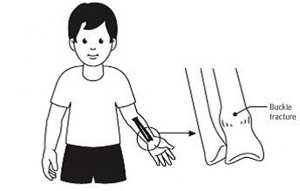
Signs and symptoms
- Pain when moving the affected limb.
- Swelling
- Tenderness
- Bruising
- An unusual bump on the bone.
- Young children may favour one arm or leg over the other (such as playing with toys with only one hand) or not want to use the injured body part.
How are buckle fractures diagnosed?
A doctor will diagnose a buckle fracture with a physical exam and or an X-ray. The injury may sometimes be difficult to see on an X-ray.
How is it treated?
Buckle fractures are usually treated with a pre-made wrist splintor a Plaster of Paris backslab. Both these methods, combined with simple painkillers such as paracetamol and ibuprofen, will help control your child’s pain. Buckle fractures take around a month to heal.
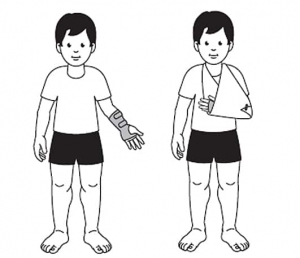
Care at home
- A buckle fracture is a minor fracture but should still be treated as if the injured limb is in plaster. The splint should be worn for four weeks. During this time and for four weeks after the splint is removed, your child should avoid all sporting activities (including swimming) and rough play.
- The splint should be worn for four weeks. During this time and for four weeks after the splint is removed, your child should avoid all sporting activities (including swimming) and rough play.
- Your child’s arm may be sore for a few days and they need some pain relief. If their arm is swollen, you can reduce this by raising the arm above the level of the heart.
- The splint may be removed for showering purposes but should be worn at all other times, including sleeping.
- If the arm remains sore after the splint is removed, see your GP.
When to seek help
See your GP if your child has any common symptoms, or if:
- they continue to have pain despite pain relief or has increasing pain
- their arm becomes more swollen
- you are concerned for any reason.
For non-urgent medical advice, call 13 HEALTH (13 43 25 84) and speak to a registered nurse.
In an emergency, call Triple Zero (000) and ask for an ambulance.