This fact sheet has been written for parents and carers about how to use this medicine in children. It answers some common questions about the use of Epidiolex®.
It does not contain all the available information and does not take the place of talking to your neurologist or hospital pharmacist.
Please read this information carefully and keep it somewhere safe so that you can read it again.
Why is it important for my child to take this medicine?
Cannabidiol (Epidiolex®) is an investigational medicinal cannabis product used in some children with severe and difficult to treat epilepsy. It is used in addition to your child’s current anti-epileptic medication unless instructed otherwise by your child’s neurologist. Unlike some other medicinal cannabis products, Epidiolex® does not contain tetrahydrocannabinol (THC), the psychoactive component of the cannabis plant.
Cannabidiol (Epidiolex®) availability
Epidiolex® is currently only available as an oral liquid (100mg/mL).
Currently Epidiolex® is not a registered product in Australia and is only available through the Compassionate Access Scheme (CAS) at Queensland Children’s Hospital with a valid prescription written by an approved prescriber. It is not available in community pharmacies or other Queensland Health hospitals.
How should I give it?
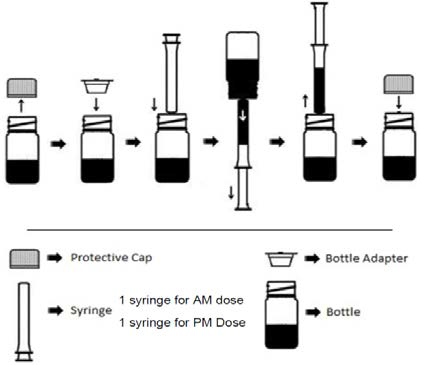
This medication is to be given orally (via the mouth) or via gastrostomy/PEG or nasogastric tubes.
- Before dosing ensure oral dispenser provided is COMPLETELY DRY. Even one drop of water/saliva in the oral dispenser can make the solution go cloudy (see over for more information).
- Remove the child resistant cap from the bottle.
- Push the bottle adaptor firmly into the top of the bottle (a new adaptor should be used for each bottle).
- Push the oral dispenser provided into the hole in the adaptor and turn the bottle upside down.
- Withdraw plunger on oral dispenser to draw up required dose.
- Turn the bottle upright then remove the oral dispenser.
- Put the child resistant cap back on the bottle, leaving the adaptor in the bottle.
- Administer the dose to your child.
- Wash out the oral dispenser with warm soapy water followed by a rinse with warm water. Allow to air dry.
- Ensure oral dispenser is completely dry before use. It is recommended to alternate oral dispensers i.e. do not use the same oral dispenser for the morning and evening dose.
When should I give my child the medication?
Epidiolex® is to be given TWICE a day (in the morning and the evening) approximately every 12 hours. It does not matter whether the medication is given with food or away from food but it is important to be consistent eg. If you always give Epidiolex® with food then you should continue to do this.
How much should I give?
Your neurologist will work out the amount or dose that is right for your child. The dose will be increased slowly to start with to ensure your child tolerates the medication.
What if my child is sick (vomits)?
- If your child is sick (vomits) less than 15 minutes after having a dose of Cannabidiol (Epidiolex®) give them the same dose again.
- If your child is sick (vomits) more than 15 minutes after having a dose of Cannabidiol (Epidiolex®), you do not need to give them another dose. Wait until the next normal dose.
If your child is sick (vomits) again, seek advice from your neurologist, hospital pharmacist or hospital. They will decide what to do based on your child’s condition and the specific medicine involved.
What if I forget to give it?
Give the missed dose when you remember during the day, as long as this is at least 8 hours before the next dose is due. You do not need to wake up a sleeping child to give a missed dose.
Document any missed doses and let your child’s treating neurologist know at your next appointment.
Never give a double dose of the medicine. If your child has missed more than one dose, contact your neurologist for advice.
What if I give too much?
If you think your child has taken too much of this medicine, immediately telephone Queensland Poisons Information Service on 13 11 26 for advice, or go to the Emergency Department of your closest hospital. You should do this even if there are no signs of discomfort or poisoning, your child may still need medical attention. Notify your child’s treating neurologist the next business day.
Are there any possible side effects?
We use medicines to make our children better, but sometimes they have other effects that we don’t want (side effects). Your child may experience none, some, or all of the side effects listed below.
As there is limited information available on Epidiolex® in children, there may also be side effects that we don’t know about yet and that may be serious. Tell your child’s treating neurologist immediately about any new or unusual symptoms that your child gets while taking this medicine. The neurologist will be able to advise you on the best way to manage any side effects your child is experiencing.
Possible side effects
- Feeling tired (fatigued)
- Feeling sleepy, drunk or abnormal
- Dizziness
- Diarrhoea
- Increased appetite
- Decreased appetite
- Weight gain
- Weight loss
- Changes in liver function
- Feeling irritable
- Difficulty walking
- Skin rash
You must contact your treating neurologist, hospital pharmacist or clinical nurse if you notice any side effects, unusual reactions or behaviour whilst taking Epidiolex®
Allergic reaction
If your child experiences an allergic reaction stop giving Epidiolex® immediately and contact your child’s neurologist if reaction is minor or call an ambulance (000) if reaction is severe or they are having difficulty breathing. Signs of allergic reaction include rash or itchy skin, swelling of the face, lips, tongue or other body parts, wheezing or difficulty breathing, shortness of breath or severe light-headedness.
Are there any precautions?
Epidiolex® may produce side effects such as feeling tired, feeling drunk, sleepy or abnormal. This may affect your child’s ability to do skilled tasks or concentrate. Your child is advised not to drive, ride a bike or skateboard etc., use machinery or take part in any potentially dangerous activity until it is know if the medication affects their ability to do these tasks.
Can other medicines be given at the same time as Epidiolex®?
- If your child is on anti-epileptic medication(s), they should continue to take these medications unless instructed otherwise by your child’s neurologist.
- Epidiolex® should not be taken with some other medicines that you get on prescription or over the counter (including vitamins, supplements and herbal products). Tell your neurologist and hospital pharmacist your child is taking Epidiolex® before starting any new medicine.
- Always check with your neurologist or hospital pharmacist before giving any other medicines to your child. This includes herbal or complementary medicines.
Is there anything else I need to know about Epidiolex®?
Admission into hospital
If your child is admitted into hospital it is very important that you bring your child’s Epidiolex® and the oral dispensers provided with you into hospital.
Epidiolex® is not available anywhere except Queensland Children’s Hospital so it is crucial that you take your child’s medicine with you to avoid missing any doses.
The oral dispensers must also be taken to hospital as the ward will not have them.
Stopping Epidiolex®
It is very important not to stop taking this medicine abruptly unless your treating neurologist advises you to. If your child is no longer to take Epidiolex® your neurologist and hospital pharmacist will make a plan to slowly reduce the dose until your child has stopped the medicine.
Impact on travel
You and your child are not to take Epidiolex® outside of Australia because it may be illegal to transport it across many international borders.
Discarding bottles
Do not throw away any medications via wastewater or household waste. Return any bottles with expired, unwanted or unused liquid to the Queensland Children’s Hospital Pharmacy on level 2 for appropriate disposal.
Flammable product
Remember this product is flammable. Do not squirt or use the solution near naked flames or heat sources.
Cloudiness
If the liquid comes into contact with any water or moisture then it can make the solution go cloudy. If this occurs you can continue to use the cloudy solution for a maximum of seven days however it is best to get a new bottle as soon as you can.
Contraception and pregnancy
The effects of Epidiolex® on sperm, a pregnancy or a nursing child are unknown. If your child is of childbearing age and is sexually active, s/he must use birth control during and for 90 days after their last dose of Epidiolex®.
Where should I keep this medicine?
- Keep Epidiolex® in a cool place where the temperature stays below 30°C. DO NOT store in the fridge (any moisture or condensation will cause the liquid to go cloudy).
- Epidiolex® contains alcohol so it is important to keep it away from heat and ensure it is protected from light.
- After opening the bottle, the oral solution will expire in 28 days. Any remaining medicine is not suitable for use and must be returned to Queensland Children’s Hospital Pharmacy Department for destruction.
- Make sure that children cannot see or reach the medicine.
- Keep the medicine away from pets.
- Keep the medicine in the container it came in.
General advice about medicines
- Try to give the medicine around the same times each day. This will help you remember to give it every day.
- Only give this medicine to your child. Never give it to anyone else, even if their condition appears to be the same, as this could do harm.
- If you think someone else may have taken the medicine (either intentionally or by accident), contact the Queensland Poisons Information Centre on 13 11 26.
- Make sure that you always have enough medicine. Ensure you have an appointment to get a new prescription before you run out.
- Make sure that the medicine you have at home has not reached the ‘best before’ or ‘use by’ date on the packaging. Give old medicines to your hospital pharmacist at Queensland Children’s Hospital to dispose of appropriately.
Product description
Epidiolex® oral solution is available in a 100mg/mL strength and is supplied in an amber bottle with a child resistant cap. It is also comes with a bottle adaptor and oral dispenser for administration.
Ingredients
- Cannabidiol
- Ethanol 10% v/v (alcohol)
- Sucralose
- Sesame oil
- Strawberry flavouring
If your child has an allergy to any of the ingredients listed above then do not give Epidiolex® and speak with your neurologist.
Who to contact for more information
Your treating neurologist, hospital pharmacist or nurse will be able to give you more information about Epidiolex® and about other medicines used to treat epilepsy and seizures.
In an emergency, always call 000.
Queensland Poisons Information Centre 13 11 26.