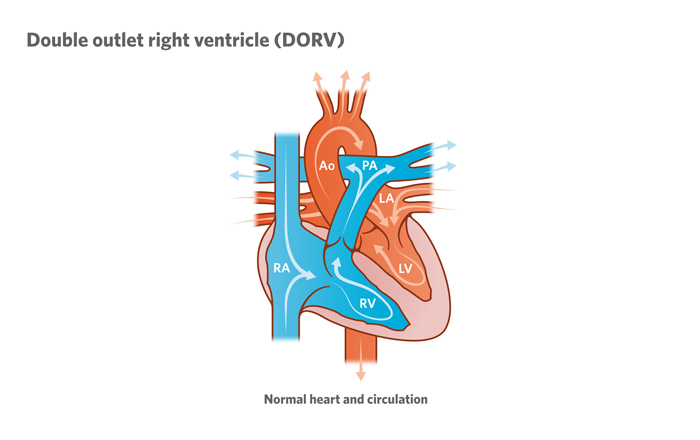
Double outlet right ventricle (DORV) is a condition where the right chamber (ventricle) of the heart has two outlets – the pulmonary artery and the aorta, which causes the mixing of oxygen-rich “red” blood and oxygen-poor “blue” blood.
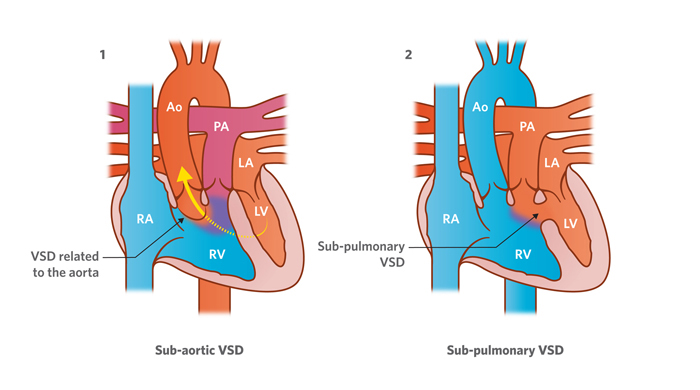
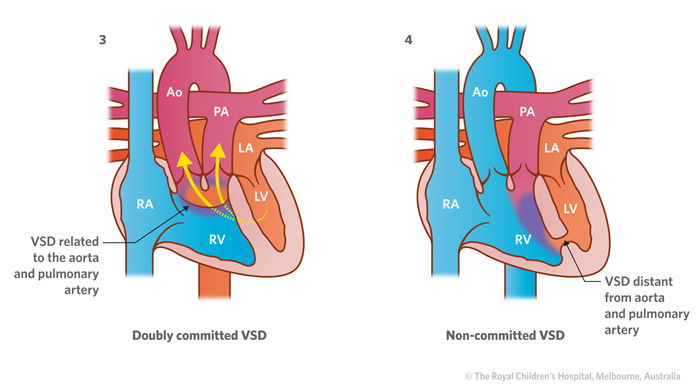
DORV is normally caused by a ventricular septal defect (VSD) — a hole in the heart wall between the pumping chambers of the heart (ventricles). The hole allows blood to pass through and mix in the right and left ventricles.
This mixing of the blood causes changes to oxygen levels in the body and the heart has to work harder to maintain the body’s requirements.
Signs and symptoms
The main signs and symptoms include:
- sweating
- poor feeding
- poor weight gain
- shortness of breath
- fast breathing
- blueness of the skin, lips and nail beds
- heart murmur.
Diagnosis
Many cases of DORV are diagnosed via ultrasound when a baby is still growing in the womb. It may also be be detected if a doctor hears a heart murmur when examining your child.
Tests to diagnose DORV include:
- Electrocardiogram (ECG) – measures the electrical activity of the heart.
- Echocardiogram (Echo) – uses sounds waves to produce a moving picture of the heart.
- Cardiac catheterisation – A thin flexible tube (called a catheter) is inserted into a blood vessel in the groin and fed up into the heart to measure pressures and oxygen levels, and visualise heart structures using X-ray equipment. The procedure is performed under a general anaesthetic. Learn more about cardiac catheterisation.
Treatment
DORV is corrected with surgery to close the VSD and redirect blood flow. Left ventricular blood flow is directed into the aorta and right ventricular blood flow is directed into the pulmonary artery. Your child’s cardiologist and surgeon will discuss the most suitable options with you.